
MOFA Requirements for Translated Documents in Qatar (2025 Guide)
TrustLink
Business Setup & Compliance Team, Qatar
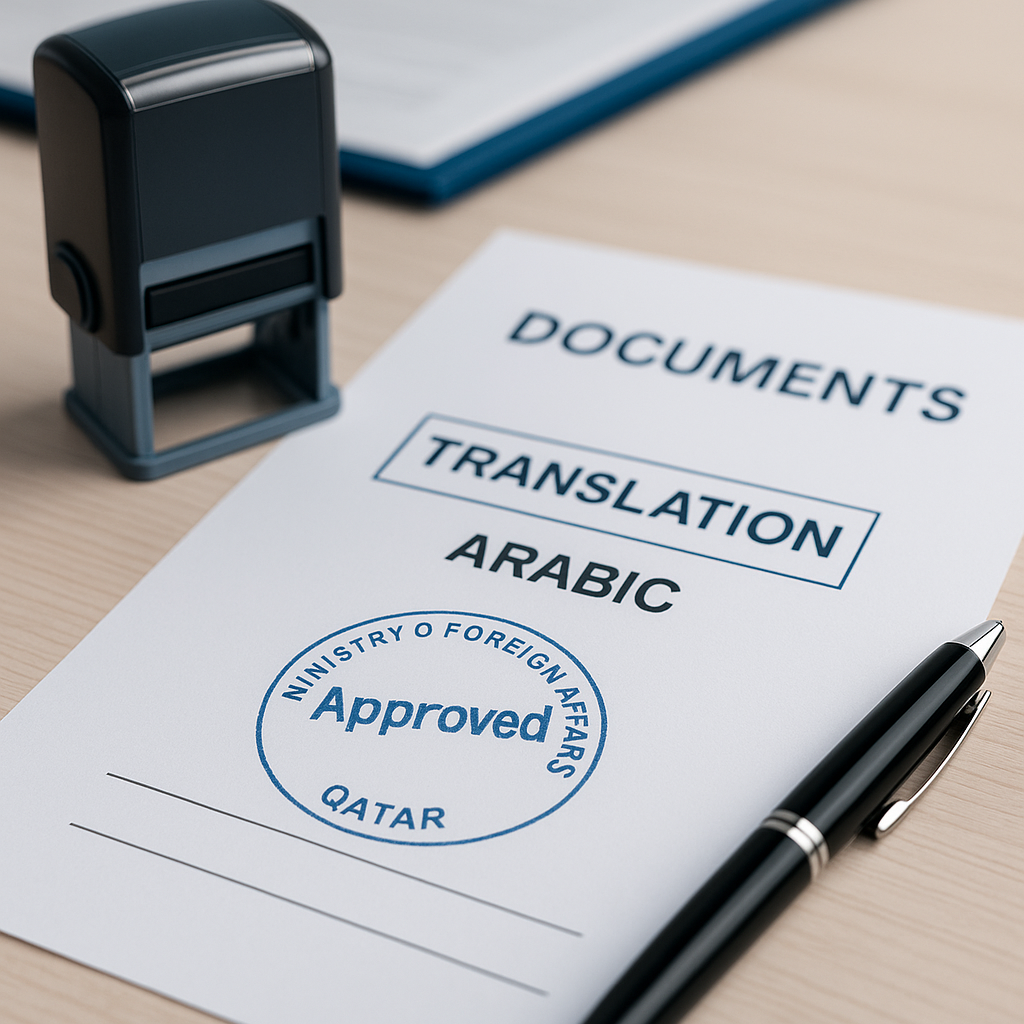
MOFA Attestation Requirements in Qatar
If you’re starting a business, applying for a visa, or dealing with official paperwork in Qatar, chances are you’ve heard this phrase before:
“You’ll need MOFA-attested documents.”
But what exactly does that mean—especially when it comes to translated documents?
In this post, we break down everything you need to know about the Ministry of Foreign Affairs (MOFA) requirements for translated documents in Qatar, so you can avoid delays and keep your process smooth.
What Is MOFA Attestation?
MOFA attestation is the final stamp of approval from Qatar’s Ministry of Foreign Affairs. It confirms that your document is legally recognized for use in Qatar—whether it’s personal (like a marriage certificate), academic (like a degree), or business-related (like incorporation papers).
This is especially important for documents issued outside Qatar that need to be used for:
Business setup
Immigration/visa applications
Employment
Marriage registration
Education
Legal proceedings
When Is Translation Required?
If your document is not originally in Arabic, it must be translated into Arabic by an authorized legal translator in Qatar.
Even English documents—which are widely understood—must be translated into Arabic for official use and MOFA attestation.
MOFA Requirements for Translated Documents (2025)
Here’s what MOFA typically requires for translated documents to be accepted:
1. Original Document Must Be Attested First
Before you even think about translating it, your original document must be attested in the country of origin by:
The relevant authority (like a Ministry of Education or Commerce)
The Foreign Ministry of that country
The Qatari Embassy or Consulate in that country
Without these steps, MOFA in Qatar won’t proceed with your attestation.
2. Certified Arabic Translation
Your document must be professionally translated into Arabic by a licensed translator recognized by Qatar's Ministry of Justice.
Self-translations or unofficial versions will be rejected.
Pro tip: Most legal typing centers in Qatar offer certified translations. Make sure they stamp the translated copy and include their license number.
3. Attach Original + Translation Together
MOFA wants to see both the original document and the Arabic translation together.
Both versions should be clearly printed, stapled or clipped together, and ideally presented in a folder when submitting at MOFA.
4. Translation Must Match Exactly
MOFA will check that the translation is an accurate and complete reflection of the original.
Missing details like names, dates, or improper formatting can lead to rejection. If any part of the translation is unclear or looks incorrect, MOFA may ask for re-translation.
Common Mistakes to Avoid
Submitting translations without attested originals
Using unlicensed translators
Translating only part of the document
Incorrect spellings of names (especially if they must match passports)
Presenting photocopies without original stamps
Let TrustLink Handle It for You
We’ll make sure your documents are accepted the first time—no rejections, no headaches. Need help with translation or MOFA? Contact TrustLink today.